September 14, 2026
7 Signs Your Kitchen Exhaust Hood Needs Cleaning Now
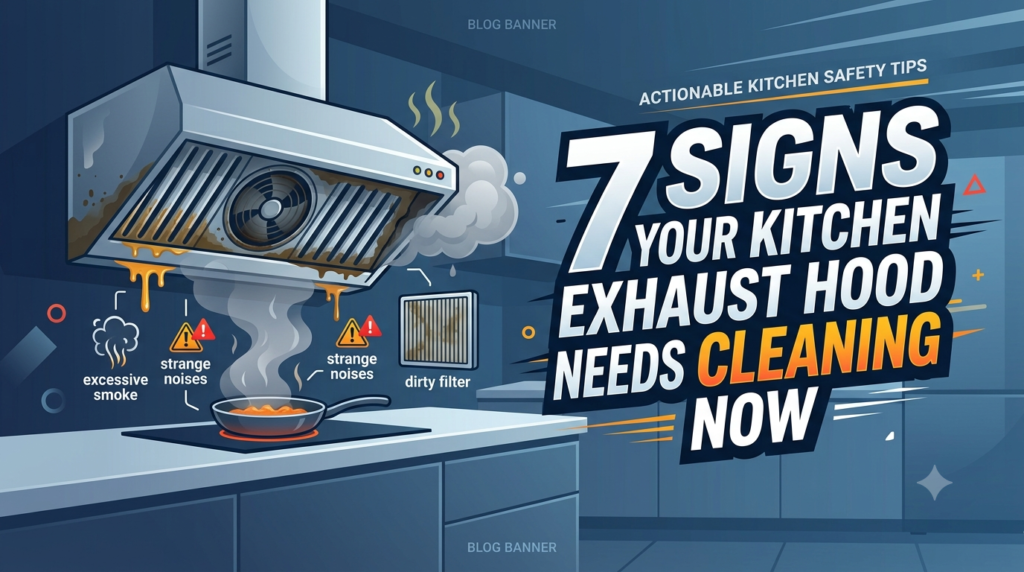
A commercial kitchen exhaust hood doesn’t fail without warning. Grease builds up gradually, and most restaurants only notice a problem once it starts affecting airflow, smell, or safety. If you’re asking whether your hood needs cleaning, these are the signs to check today — not at your next scheduled service.
1. Visible Grease on the Hood, Filters, or Duct Seams
This is the most obvious sign, and the easiest to miss during a busy shift. Run your finger along the underside of the hood or the edge of a baffle filter. If it comes away oily or sticky, grease has already built past the point of basic wiping. Grease dripping from duct seams or the hood lip means buildup has reached a level that needs professional degreasing, not a quick clean.
2. A Burning or Smoky Smell When the Exhaust Runs
A clean exhaust system shouldn’t produce odour on its own. If you notice a burning, smoky, or acrid smell specifically when the fan is running — even when nothing is actively cooking — that’s often grease residue heating up inside the hood or ductwork. This is one of the clearest early warning signs of a fire risk building in your system.
3. Weak Airflow or a Smokier Kitchen Than Usual
If your kitchen feels hotter, hazier, or smokier than it used to during the same cooking volume, your exhaust fan is likely struggling to pull air through grease-clogged ductwork. Reduced airflow doesn’t just affect comfort — it also means smoke and airborne grease particles are settling on surfaces and equipment instead of being vented out.
4. Smoke Alarms Triggering More Often
An exhaust system in good condition should be efficiently removing smoke and heat from the kitchen. If smoke detectors are going off more frequently than before, with no change in cooking practices, it’s often because the hood and ductwork are no longer venting effectively — grease buildup is restricting airflow and letting smoke linger.
5. Your Compliance Sticker Shows an Overdue Date
Every professional hood cleaning should leave you with a dated compliance sticker on the hood. Check it. If the date has passed — even by a few weeks — your system is technically out of code, regardless of how clean it looks. This is one of the first things a fire marshal checks during an inspection.
6. Your Last Health or Fire Inspection Flagged the Exhaust System
If an inspector has already noted grease buildup, an overdue cleaning, or ventilation concerns, don’t wait for a follow-up visit to address it. Repeat violations can lead to fines or, in serious cases, an order to stop operations until the system is brought up to code.
7. It’s Been More Than 6 Months Since Your Last Cleaning
Even if none of the above signs are obvious yet, time alone is a reason to check. NFPA 96 recommends cleaning every 3–4 months for high-volume kitchens, every 6 months for standard restaurants, and every 12 months for low-volume kitchens. Grease buildup is often invisible in the early stages — by the time it’s visible or smells noticeable, it’s already had months to accumulate inside ductwork you can’t see.
Why These Signs Shouldn’t Wait
Grease is a fuel source. The longer it sits inside a hood or duct system, the more it dries and hardens, and the harder — and more expensive — it becomes to remove. More importantly, grease buildup is the leading contributor to commercial kitchen fires, and most insurance policies require proof of regular, documented cleaning to honour a claim. Catching these signs early is almost always cheaper than dealing with a failed inspection, a denied insurance claim, or a fire. If it’s been a while since your last service, it’s worth reviewing our full commercial kitchen cleaning services to see everything a proper inspection covers.
What to Do If You Notice Any of These Signs
If your kitchen is showing one or more of these warning signs, the next step is a professional inspection — not a DIY wipe-down. A qualified technician can tell you exactly how much buildup exists inside the ductwork and fan, which isn’t visible from the kitchen floor, and get your system back to a documented, code-compliant standard. Our team has been inspecting and cleaning restaurant exhaust systems across Ontario for over 11 years — read more about our background.
Our restaurant hood cleaning service covers a full inspection, hood and duct degreasing, fan cleaning, and complete compliance documentation, including an NFPA 96 sticker and service report — everything you need on hand for your next inspection.
Frequently Asked Questions
How can I tell if my hood needs cleaning without a professional inspection?
Check for visible grease on the hood or filters, a burning smell when the fan runs, weaker airflow, and the date on your compliance sticker. These are reliable early indicators, though a full duct and fan inspection will always show more than a visual check from the kitchen.
Is a smoky kitchen always a sign of a dirty exhaust hood?
Not always, but it’s one of the most common causes. Reduced airflow from grease-clogged ductwork is a frequent reason kitchens feel smokier or hotter than usual, especially if it’s a gradual change over weeks or months.
How long can I wait after noticing these signs before cleaning?
Treat these signs as urgent rather than something to schedule around convenience. Grease buildup increases fire risk the longer it sits, and an overdue system can fail an inspection at any time.
Do these signs mean I need duct cleaning too, not just hood cleaning?
Often, yes. Grease that’s visible on the hood or filters has usually already made its way into the ductwork. A complete service should always include the hood, filters, ductwork, and exhaust fan together — see our commercial exhaust hood cleaning page for details.
Book a Hood Inspection
If you’ve noticed any of these signs, don’t wait for your next scheduled cleaning. Call +1-647-333-5455 or request a free inspection and we’ll assess your system and get you back to code.
Post Tags:
About Us
Hood Cleaning Masters offers the finest cleaning services with specialization in cleaning hoods, roof fans and commercial equipment across Ontario
